Fernando Lindez
Interview by Juan Martí
Fernando Lindez moves through the worlds of fashion and cinema with a quiet magnetism that is difficult to define but impossible to ignore. There is something about the balance he holds — a mixture of softness and sensuality, introspection and confidence — that makes him feel both contemporary and strangely timeless. In front of the camera, he embodies a rare duality: a kind of understated tenderness paired with an instinctive physical presence. It is precisely that tension that has turned him into one of the most recognisable faces of a new generation of models and actors emerging from Spain.
Discovered as a teenager and quickly embraced by the international fashion industry, Lindez has built a career that moves effortlessly between editorial pages, runway shows and major campaigns. Yet what sets him apart is not simply his striking features or his height — though both certainly help — but the way he inhabits an image. During a photo shoot, he shifts between moods with natural ease: one moment distant and contemplative, the next disarmingly warm. There is a composure in the way he carries himself, a calm control of gesture and gaze that photographers quickly recognise as instinctive rather than performative.
That same instinctive quality defines his personal style. Lindez gravitates towards simplicity: clean lines, classic silhouettes, pieces that feel lived in rather than staged. It mirrors the way he approaches the public eye — without excess, without unnecessary noise. Even as his visibility within the global fashion landscape has grown, he has maintained a kind of quiet discretion that feels increasingly rare in an industry built on exposure.
But fashion, for Lindez, has never been the whole story. Over the past few years he has steadily carved out a parallel path in cinema, developing his craft with patience and curiosity. Acting, he explains, offers him something that modelling cannot: the opportunity to disappear into other lives. Where a photograph captures a moment, a character demands immersion — psychology, vulnerability, contradiction.
His growing filmography reflects that desire to explore complexity. From series that introduced him to a wide international audience to new productions currently in development, Lindez has shown an interest in characters that carry tension beneath the surface. He speaks openly about his fascination with human contradictions — the darker corners of personality, the stories that reveal what lies beneath appearances.
It is perhaps this curiosity that makes him such a compelling presence on screen. There is a watchfulness in him, a sense that he is constantly observing the world around him, gathering fragments of behaviour and emotion. It feeds both sides of his career: the model who can transform within a frame, and the actor who searches for truth inside a character.
At a moment when his schedule oscillates between film sets, fashion weeks and international productions, Fernando Lindez remains strikingly grounded. Thoughtful, reserved and occasionally self-deprecating, he approaches his career less like a spectacle and more like a process of discovery. In conversation, he reveals a reflective temperament — someone as interested in understanding people as he is in portraying them.
In this interview, we speak with Lindez about intuition, vulnerability, creative discipline and the strange beauty that often hides inside imperfection. Between film projects and fleeting returns home to Madrid, he reflects on what it means to grow within two industries that thrive on transformation — and why, sometimes, the most powerful presence comes from quiet intensity rather than noise.
We haven't spoken in a long time, how's everything going?
Fine, I'm fine. Calm, peaceful. The truth is that I'm in a pretty serene place right now. Over time, I've learned to take everything more calmly and not put so much pressure on myself with expectations.
With new goals and resolutions?
Yes, although this year I'm approaching it differently. I used to start the year with a huge list of resolutions, like a bag full of things I wanted to do. But over time I've realised that doesn't always work. In the end, you set yourself too many goals and many of them fall by the wayside because you can't maintain the same consistency or discipline in all of them. Now I prefer to have fewer goals, but very clear ones.
And what are those goals?
Above all, to focus on my personal and professional growth.
That sounds a bit abstract. Imagine it's already December: what would have to happen for you to feel that you've grown professionally?
Well, it's true that every time a new year begins, you get that feeling of wanting to start something different, of setting yourself changes or new challenges. In my case, this year I want to focus a lot on training, personal growth and also sport. Let's say I have three clear pillars on which I want to put all my energy and attention.
Professionally, where would you say you are right now?
I like to think that I'm still in the early stages. It's true that I've been working for years, but I still feel like I'm learning a lot. I'm absorbing a lot from the people I work with, from people who have been in the industry longer. I like to think that I'm still quite new to what I do, that I still have a lot of room to grow.
New as an actor or as a model? Because as a model you already have a pretty solid career.
Yes, as a model it's true that I have more experience, more years working. But above all in cinema I feel like I'm just starting out. That's where I really feel like I'm just beginning, that I still have a lot to learn and experience.
In the world of fashion, how would you say you've changed since you started?
In many ways. I started when I was 17, I was practically a child and had no idea what I was getting myself into. I didn't know how the industry worked or what to expect from it. You change a lot over time. Personally, fashion has given me security, self-confidence, self-esteem... and also personality. Ultimately, it's an environment that forces you to get to know yourself better and understand how you present yourself to others.
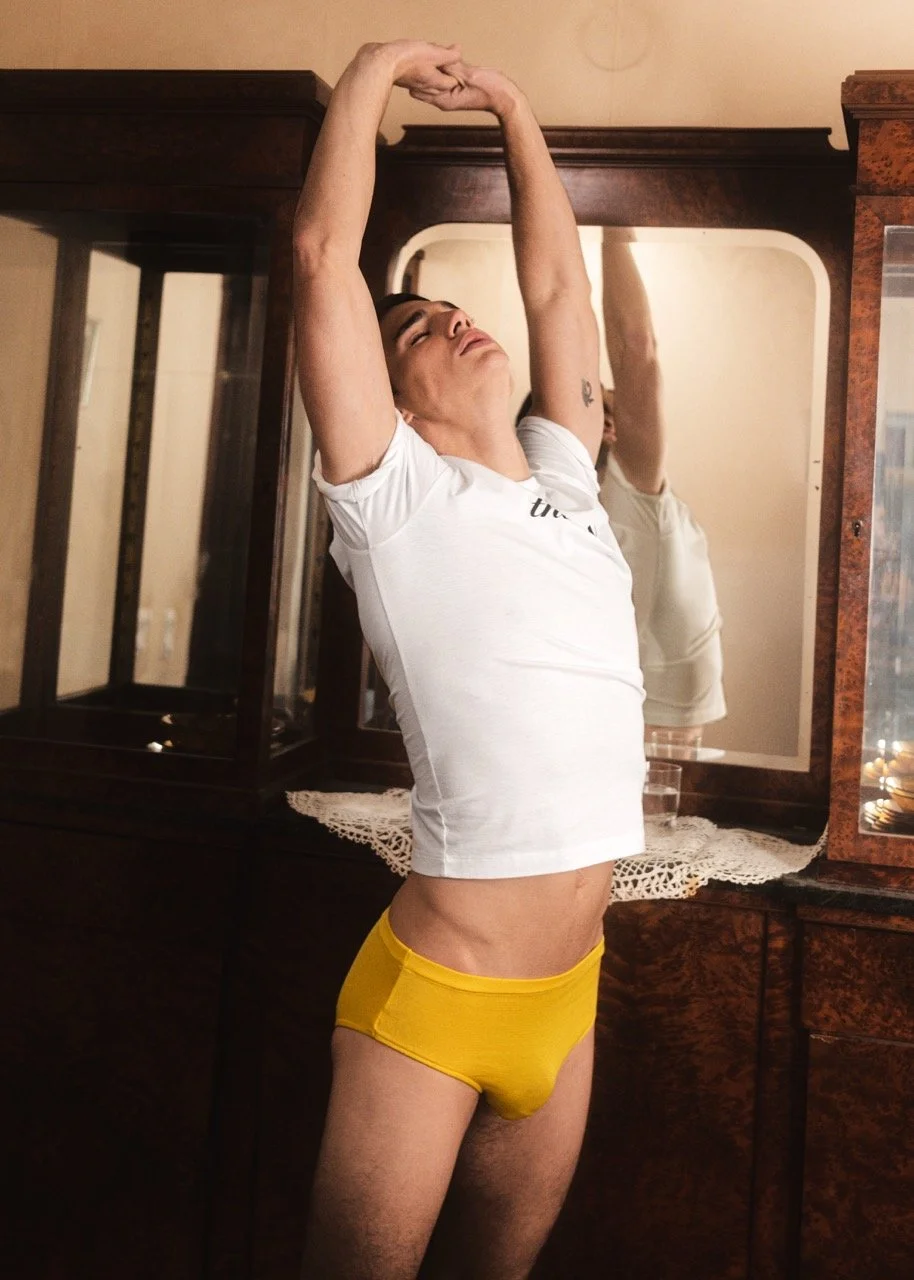
But when you entered a world you didn't know, didn't you seek advice or information? Didn't you look at how everything worked?
The truth is that it all came about quite by chance. I had never wanted to be a model, it was never something I actively sought or aspired to. It wasn't a dream I had since I was a child. It just happened. As for advice, you learn little by little from the people you work with. From those who have more experience. I've always been someone who likes to listen, observe and learn from others. I try to speak up when I have something to say, but above all I try to absorb as much as I can.
Would you say that fashion is a friendly industry for people who are just starting out?
Now, with hindsight, I don't think it always is. But when I started, I was very young and very naive, so I was unaware of a lot of what was going on around me. I worked with very prestigious people in the industry, with very important names, and I had no idea who anyone was. I would arrive at places and not really know who I was working with. Often, I didn't even understand what I was doing. I was like a very naive child in the middle of a jungle.
Do you regret anything from that period?
I think everyone regrets something in their life, or not having done certain things. But over the years I've learned to turn regret into learning. If you regret something, it's because you recognise that you made a mistake or a decision that you wouldn't repeat today. But making mistakes is part of life. The important thing is to know how to turn those mistakes into something that helps you improve.
When you see photos or campaigns of yours from the past, how do you feel?
There are some jobs I've done that today I feel don't fully represent me as a person or don't reflect the image I'd like to project. But I also believe that image is built over time. It's not something you're clear about from the beginning. Besides, for a long time, I had a hard time saying no to things. Sometimes I would accept projects without knowing if I was really going to feel comfortable with them. Over time, I've seen that some of them didn't suit me. Do I regret it? Maybe. Would I do them again today? Probably not.
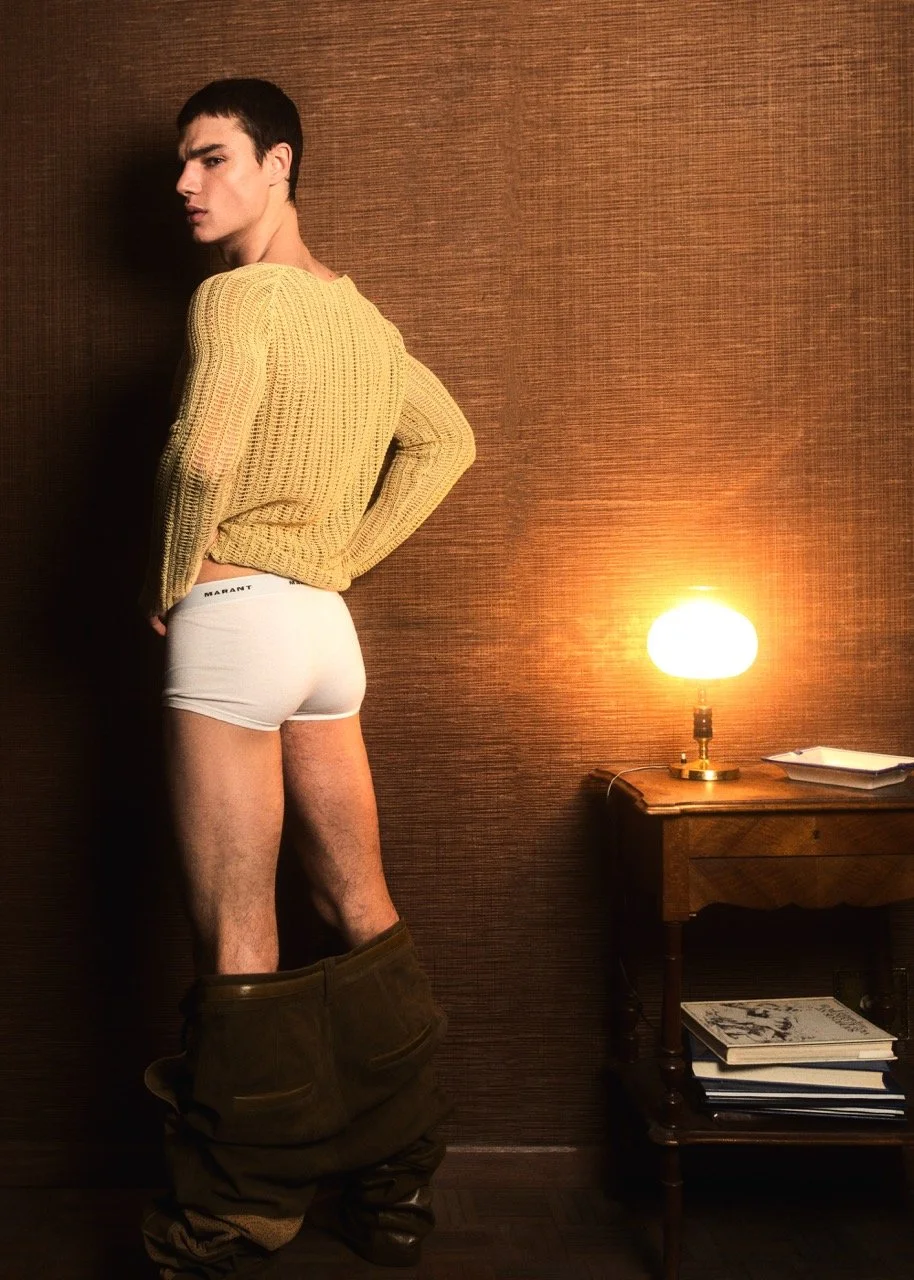
But ultimately, the model's job is also to represent someone else's vision.
Yes, of course. And that's fine, as long as everything is agreed upon. I like to work in environments where there is cooperation, where the whole team shares the same idea of what they want to do. What I mean is that there have been projects where I haven't felt entirely comfortable, where I felt I was too exposed or that it wasn't the image I wanted to convey.
What does feeling exposed mean to you?
In my case, it has mainly to do with the body. In fashion — and also in film — you work a lot with your own body, with your image. Nudity, for example, is something that can make you feel vulnerable. I've done nude work throughout my career, and I have no problem with it if it makes sense within an artistic or narrative vision. But for a long time, I found it difficult to say no. I accepted things without asking myself too many questions about why they were being done. Today, I try to place more value on what I do. I don't mind showing myself as sexy or working from a powerful aesthetic, as long as there is an intention behind it and I understand what we are communicating.
When you started out, did you feel that your opinion mattered in projects?
Not really. When I started out in fashion, I was a nobody in the industry. I was practically a mannequin. They told me what to wear, where to go, which flight to take, how to walk, what photo to take... and I just followed instructions. But I also think that's part of the process. When you start any job, you have to learn and prove that you can be there.
Do you evaluate your own work? Are there any campaigns or shoots that you're particularly proud of?
Yes, of course. There are many projects that I'm very proud of. And in most cases, it has to do with the team you work with. When you have a good artistic team, when everyone contributes something and there's good energy, the result is very noticeable. I'd say that 90% of the projects I've been involved in make me feel quite satisfied.
You've worked with some very important photographers in the industry.
Yes, and I've been very lucky in that regard. I got off to a strong start internationally. At 18 or 19, I was opening fashion shows for brands like Versace and Prada in Shanghai, I was on the cover of i-D… And at the time, I wasn't even aware of how important all that was. I've worked with incredible photographers and now, with almost ten years of experience under my belt, I appreciate it much more.
What's it like to arrive at a shoot where you don't know anyone on the team?
It's quite common. But at the end of the day, it's your job. You arrive eager to work, to contribute what you can and to collaborate with the team. And when things come together organically — the lighting, the styling, the atmosphere — something very special is created. When everyone is on the same wavelength, the result is usually much better.
Now that you're also working as an actor, do you think young, handsome actors are taken seriously?
I think acting is a profession that requires a lot of time and experience. The more you live, the more you understand the world and the more you understand people. All of that influences how you perform. If you fit the stereotype of the handsome guy who does certain more commercial projects, well, that's something that can happen. But for me, every opportunity is a way to show that I can do more. Right now, I consider myself an actor who is just starting out and wants to learn.
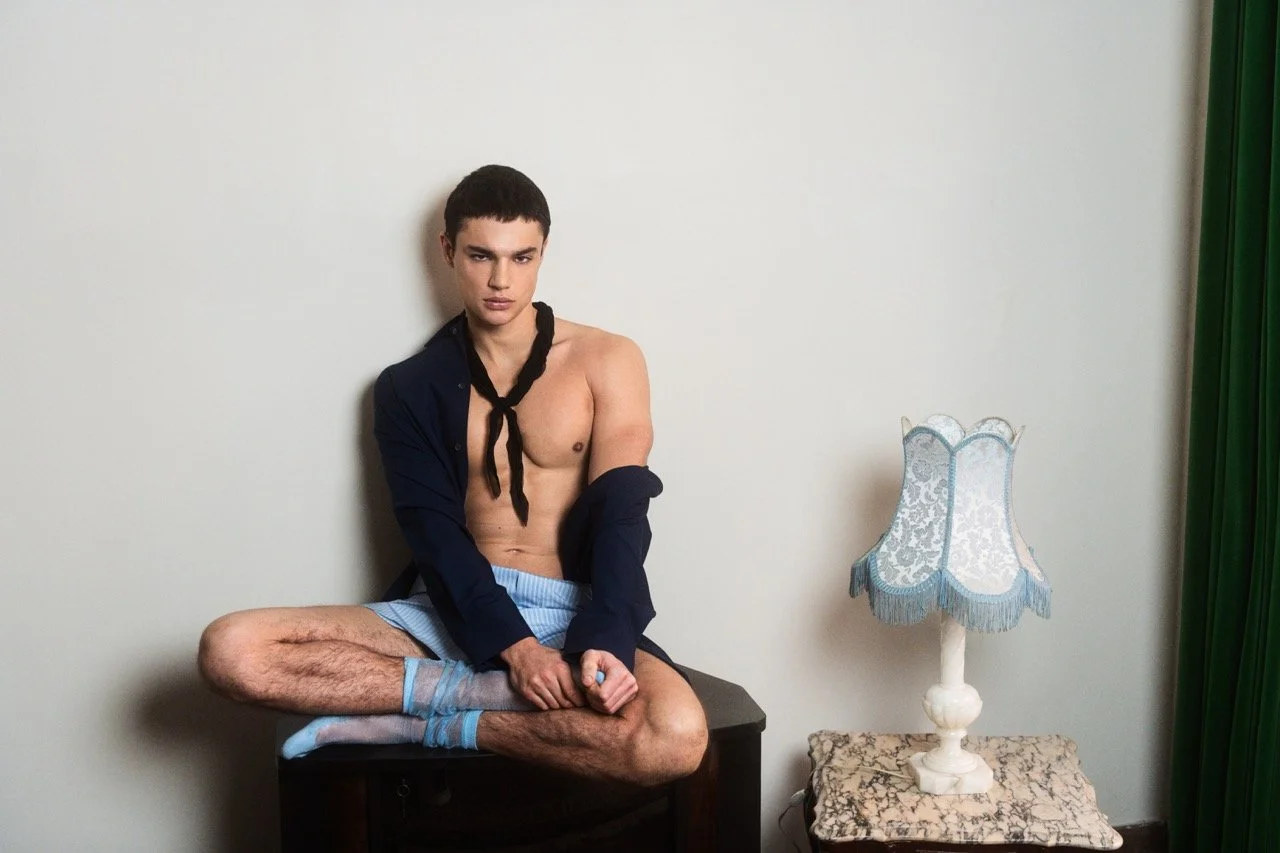
Would you like to physically transform your body for a role?
Yes, I think it's very interesting. I think it's great when an actor can be chameleon-like, when they can transform themselves to adapt to different characters. Ultimately, putting yourself in someone else's shoes also means changing things inside and out.
What would you like to do in the future as an actor?
I'd like to do more films, especially independent films or different stories. But my big aspiration would be to go to the United States and make it there.
How are you training right now?
I'm doing a lot of intensive courses. I've enrolled in several schools and right now I'm also studying at Juan Carlos Corazza's centre. For me, it's very important to train and learn from people who have been in this industry for many years.
If you could choose a story to star in, what kind of film would it be?
I really like adventure stories. A film along the lines of The Secret Life of Walter Mitty, for example. I'm really drawn to those kinds of stories.
Finally, how would you like to end this year?
To be honest, I'm more inclined to think about how I'd like to end the day. If I end the day well, that's it. Tomorrow will be another day.