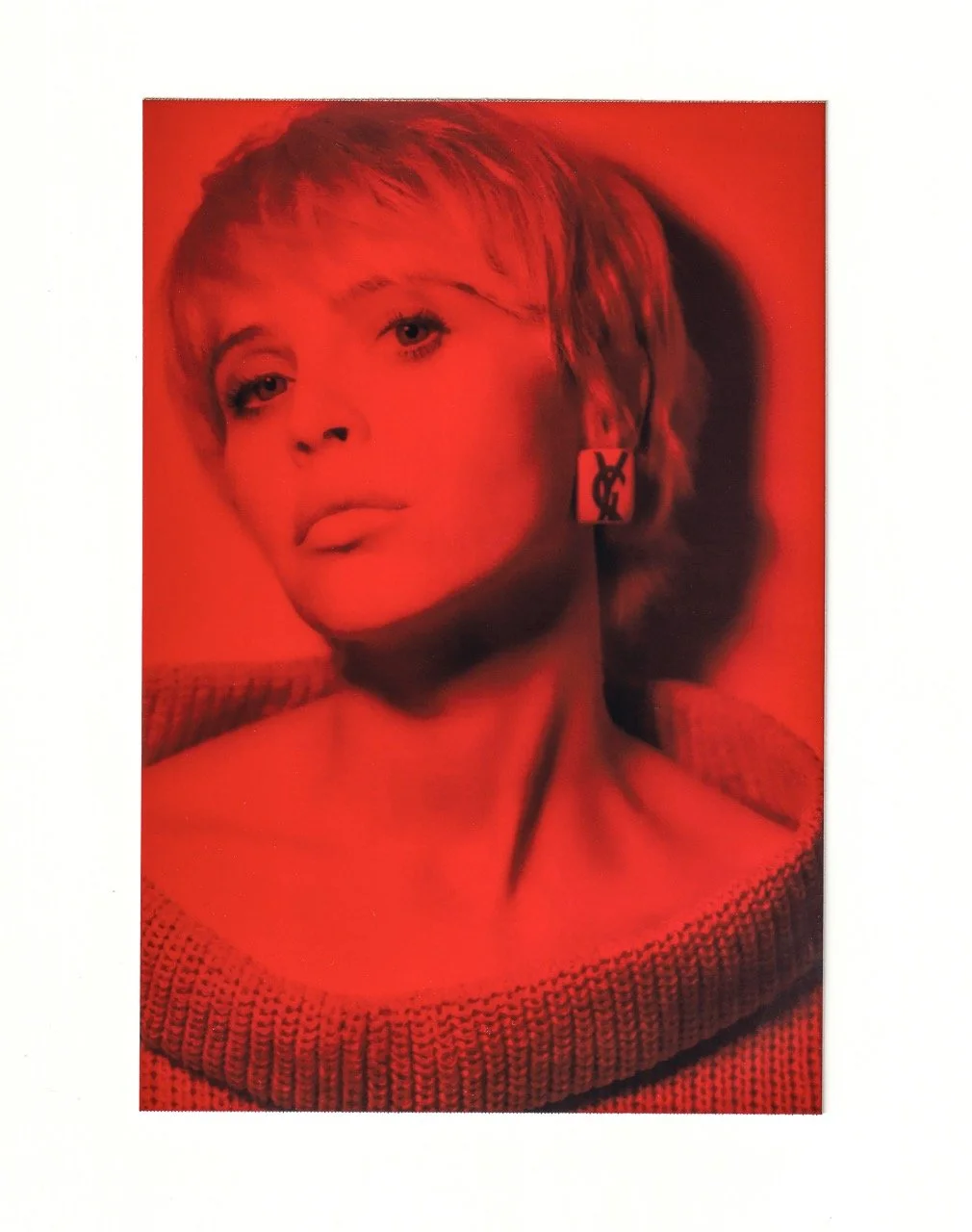
Felicity Jones
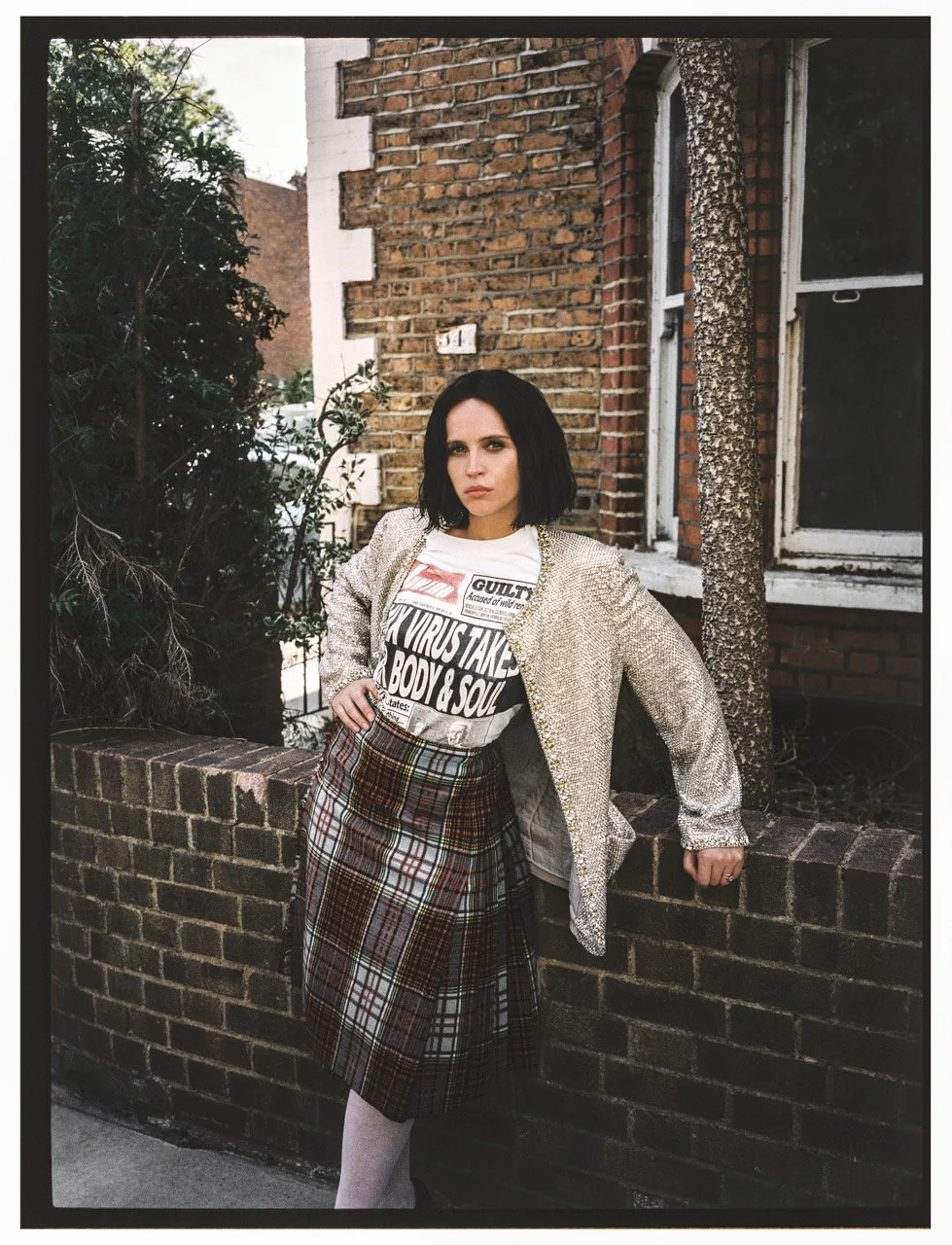
Photo: JUANKR @juankr_
Stylist: Jose Carayol @joecarayol
Talent: Felicity Jones / 2PM SHARP
Makeup: Gina Kane @ginakanemakeup / CAREN using VIOLETTE_FR LIP NECTAR
Hair: Dayaruci @dayaruci / THE WALL GROUP
Stylist Assistant: Misha Davis @misha.davis
Interview by Federica Volpe
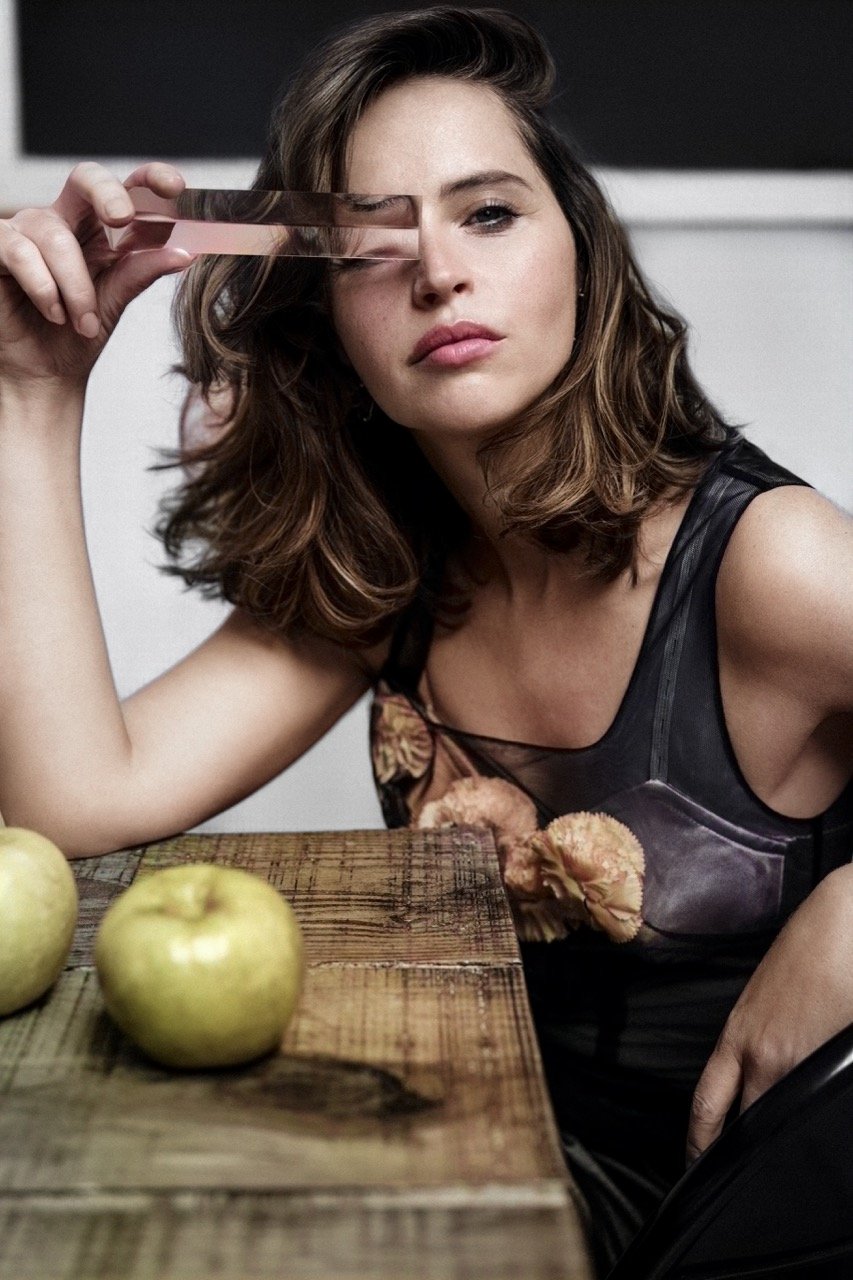
English actress Felicity Jones began her career as a child and, from that early beginning, she fell in love with the art of storytelling. She graduated in English at Oxford, so when it comes to crafting and understanding a story, audiences are in very good hands. Her performances in films like On The Basis Of Sex, The Theory of Everything and The Brutalist (for the latter two she earned an Academy Award Nomination), are a testament to that. After all, may it be through a character she portrays or a project she produces, her interest is ‘creating female characters who hopefully have an impact beyond the films’. Her latest work, Train Dreams (coming to Netflix on November 21st), in which she plays Gladys, a loving wife whose presence and absence shape her husband’s entire journey, has all the makings to do just that and give audiences yet another memorable performance by her.
Let’s start with Train Dreams, the Netflix movie you star in as Gladys …
“I fell in love with the script. The adaptation from the book was brilliant, which is rare to find. It moved me. The film is as beautiful as the script, and I just knew there was something so rare and compelling in it. I hadn’t read anything quite like it before. For me, it’s a bigger story about the meaning of life. At its core is very existential, but done in a lyrical way. The director, Clint Bentley, was so open to collaborating with me over Gladys. You know, these early homesteaders who moved to the Northwest of America were incredibly hardworking and tough and for me it was important to show just how hard that life really is. That’s why I delved into reading various diaries of women, one in particular who, like Gladys, had a child and wrote about how she coped living in the Wild West. I think that this movie tries to understand and navigate what our impact and legacy are. It is exploring what the point of life is, and for Robert, Joel Edgerton’s character, it’s about love. The love between him and Gladys is a huge part of what makes him feel immortal”
Is there something about this character you keep carrying with you even after wrapping?
“I guess somewhere deep down, there’s a little library of all the characters that I’ve played. But after I can be quite heartless in that sense: once you’ve exorcized them through the shooting, you’re quite happy to leave them behind. After Covid I was desperate for some traveling, so with this character, I was really excited about an adventure and the idea of playing someone who was really harnessing nature”
You started your career very young, how was it?
“At that age, I absolutely loved it. I felt like I was a sort of entrepreneur at 11. I made some friends back then who are still my best friends today. I did a tv series at that age about a group of school witches, and those witches are still very much part of my life. I loved the adventure and the camaraderie of the experience. I don’t know if I found being on set to be like home, but the people you meet there become like a little family with a very clear goal. It’s something that either appeals to you, or it doesn’t”
Was it what you dreamed of doing as a kid?
“I was more pragmatic, I wanted to do so many things. I loved magazines so I wanted to work in one, and also in fashion, and in books. I had lots of ideas. Deep down I think I’ve always been very passionate about acting, but I sort of didn’t want to get disappointed. So after I finished university, I remember thinking that I would give acting three years, and if it didn’t work out, I’d do something else. I was very clear with myself in that sense”
You studied English in University, how does that influence your approach to a story?
“I love storytelling and through my studies I learned how to understand a story. That’s also translated into setting up my production company (Piecrust Pictures). There’s nothing like being absorbed in a good story, whether it’s a book, a film, or a tv show. A story gathers people, it builds momentum, it hooks the audience, and that’s so vital, especially now that we are hooked by things that are probably more and more idiosyncratic than ever. We need to feel that. I think there’s such intelligence in audiences nowadays, that stories need to be so distinctive to reach them, because there’s so much competition for their eyeballs, as they say”
Is there a story or a book that has hooked you from the beginning like that?
“Yes, there’s a beautiful book that my production company and I are adapting. It’s called Laura and Emma, by Kate Greathead. I absolutely fell in love with it, so we are turning it into a film. As soon as I read it I knew I had to make it into a movie. Kate’s husband, who’s a screenwriter, is adapting it for us”
You are currently producing a tv show. Does a story change when you see it from an actor’s prospective versus a producer’s prospective?
“What’s brilliant about producing, for me, is being involved very early on, having discussions with writers, being really able to figure out a story from a much earlier stage, what works and what doesn’t. When you come in as an actor instead, it happens much later, and that’s appealing in a different way because you don’t have the responsibility that comes with producing, and you can totally focus on acting. I enjoy the challenge of putting a story into the world and how difficult it can be”
I read in an interview of yours that you don’t like seeing anything of yourself in your performances. What do you mean by that?
“I try not to. I think part of the challenge is trying to escape oneself. It’s just fun to be a different character, and that’s why I love to use wigs when I can. For the time you are playing that person, you are channeling something, and the more different they are from you, the more stimulating I find it. So there can be a real shift from when you go into the make up chair to when you come out of it”
Playing these emotionally charged characters, how do you keep them separate from Felicity?
“During shooting, I think you lose a bit of separation because that character is what you think about, what you try to channel. So there’s a bit of crossover, and you sort of need that, because the more you’re in that person’s head, the better the performance”
Was there ever a character that was more challenging to leave behind?
“It’s more the bits that stay, I think. Projects like The Brutalist, The Theory of Everything, have a real intensity to them, and they definitely stay with you years after”
You’ve played many amazing, independent women. How have you seen the perception of independent women evolving in the latest years?
“Something I’ve always been interested in with acting is creating female characters who hopefully have an impact beyond the films. I feel there are so many pressures on women. On men as well, but in a different way. Aesthetically, the pressure seems to have increased, which sometimes makes me a bit depressed. Probably with the rise of social media it feels like it would be great to return to some of that 70s kind of ‘who cares’ thinking, no make up. Wouldn’t that be wonderful? Rather than obsessing with appearance. It’s been a little disheartening to see this over the last 10 years”
How do you think women can cultivate self esteem in the social media era we live in?
“It’s a constant battle. Keeping one’s self esteem is hard. For me, the key is being in nature, going swimming, walking. I love fitness and exercise. I find that doing things that take you out of your own head really help.”
How do you navigate fear and self doubt if they ever come along?
“They inevitably do, it’s so intrinsic to life, it’s part of the human experience, isn't it? I try to do things that make me feel better, like spending time with family and friends, or being in one place for a little bit. You know, with a job where you’re traveling a lot, it’s important to regroup and have periods where you can switch off a bit. I think if you are busy all the time, you can’t really be creative. It seems more than ever, people are sort of desperate to get on holiday now, because it’s life, there’s so much coming at us. It feels that we really need those breaks to not be at the mercy of our phones”
What’s your relationship with the phone?
“It’s madness, like everyone’s. It’s literally like smoking or drinking, there should be age restrictions. You can’t sit around smoking or drinking all day, same with phones. You realize you have to be quite disciplined about it, because it’s incredibly addictive”
Has motherhood changed your approach to the roles you choose?
“I’ve always been quite choosy and fussy, but I think that now I enjoy it so much more than I ever did. I don’t tend to over-intellectualize it as much as I used to, which I think it’s beneficial to my performance. If anything, I find more joy in it because the real hard work now is looking after the children, the easy bit of the day is going to work”
What do you wish for yourself personally and professionally?
“It might sound a bit corny and trite, but I’m so grateful for the experiences I’ve had so far, and I’ve been lucky to meet so many people from different walks of life. For the future, I’m a Libra, so I always wish for balance”
By Federica Volpe