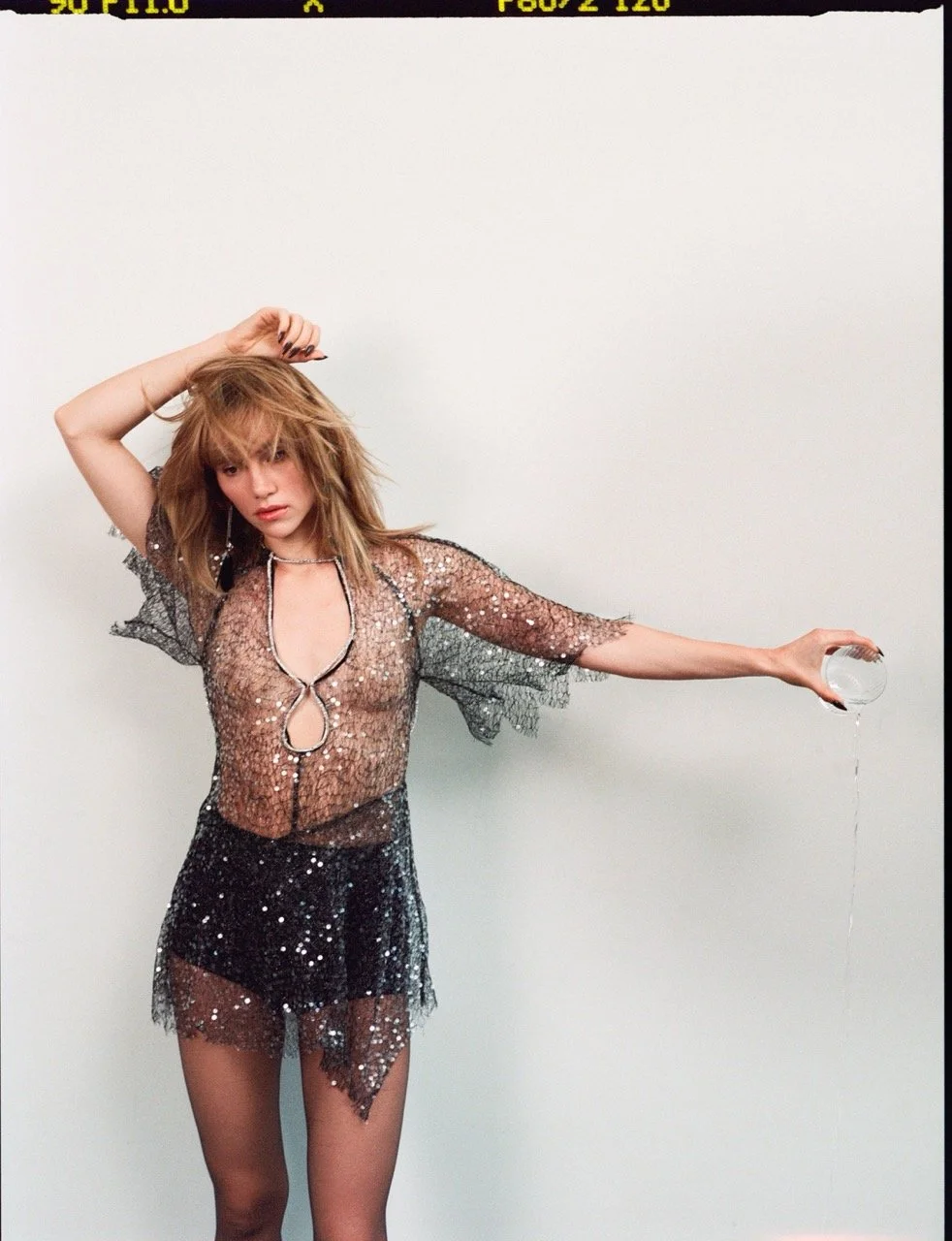
Suki Waterhouse's journey to Dream Woman
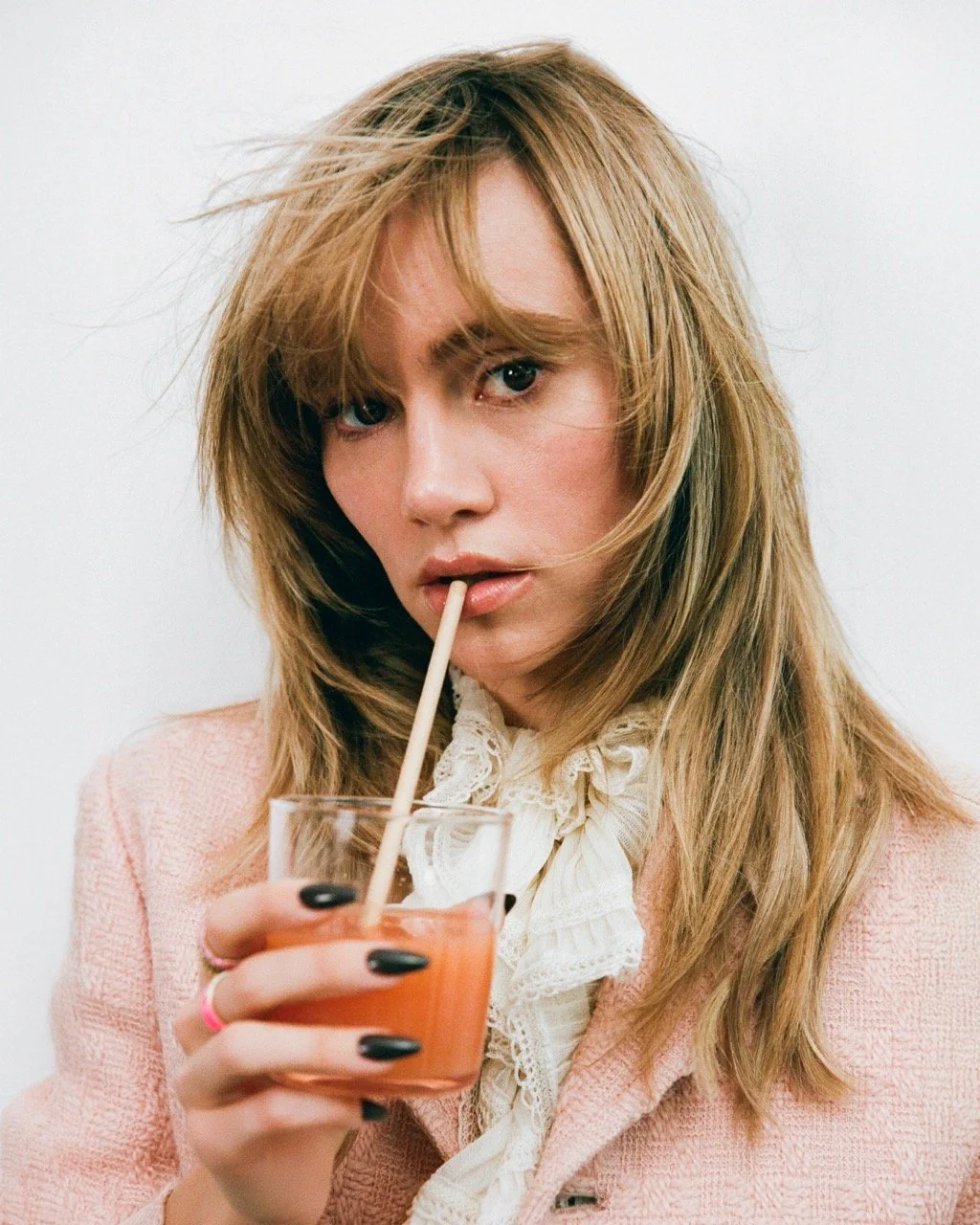
Interview by Federica Volpe
She sings “call me a model, an actress, whatever”, but Suki Waterhouse is so many things. She is a musician, an actress, an artist, a mother, an ever-evolving human and, as I could see at one of her 3 sold-out shows at the Roxy in Los Angeles, a charismatic performer. All these different facets of her aim towards the same goal though: to get to the essence of a story and turn it into art, whether on the catwalk, the screen or the stage. From her debut album I Can’t Let Go, to her performance in award-winning mini-series Daisy Jones and The Six, all the way to her second album Memoir of a Sparklemuffin and opening for Taylor Swift’s history-making Eras Tour, the story Suki is telling now through Dream Woman, her latest single, is an intimate and authentic one, but seen through other lenses: “I still feel the things I’ve been through deeply, but I see them from a different point of view now”
From I can’t let go, your first album, to Memoir of a Sparklemuffin, how would you describe the journey leading to Dream Woman?
“As you can tell also from the title of my first album, I Can’t Let Go, I felt stuck for a very long time, enveloped in sort of a dark energy. When I listen to that record I can clearly see that I was fighting my way out of it. With Memoir Of A Sparklemuffin the journey felt very nostalgic, like I was emerging from the place I was in my first record. There’s a humor in the title, it’s me spreading my wings to fly a little easier. The craziness of the past few years, this life I’m living with the support of those I have around me, have people hearing the music I’m making. It’s something I never could have dreamed would happen. Dream Woman is a sister to Sparklemuffin. I’m still processing many things that happened to me in the past while being the new self I am now. I’m in my 30s, and I’m suddenly able to have perspective on myself and a little bit of distance from some of the things I’ve been through. And that’s honestly wonderful because I can still feel those things deeply, but I see them from a different point of view now.”
So if you could go now, with the perspective of the Suki from Dream Woman, to the Suki from I Can’t Let Go, what would you tell her?
“Back then I felt like I never owned anything that happened to me. I felt like it just happened. Making music and writing about things I experienced, made me feel for the first time like they were real, that I owned them, and I had the right to talk about them in my songs. There are a lot of ways in which I find it difficult to express myself or communicate things that I need in my real life. Music for me felt like a way to do that, sort of an achievement. I think that if you could get close to the essence of what you’ve been through and create music, the things that feel really scary or like the end of the world become the beginning of a manifestation you never knew was even in you. What’s the point otherwise in going constantly over something unless you actually make something out of it that is good for you in the end?”
Do you remember the first song you ever wrote?
“Yes, it’s called Stoned and got put on YouTube somehow. It’s the first song I wrote myself that felt really complete. That one’s always my mom’s favorite”
How old were you when you wrote it?
“I was working with a producer when I was about 16 or 17 and at the time music was a solo, private thing I did. But I didn’t really have access to anything like ‘this person wants to work with you.’ So I’d always find myself in funny or strange situations where people would tell me they had producers and musician friends and that I should try to make a song with them. I was just trying to make music with anyone, taking ideas, make demos. I didn’t have a plan, and I was failing a lot. I surely made things that will never see the light of day, but that’s how you learn and it took me a long time to get to a place where I could stand behind a song, feel proud of it and have the need to share it.”
Do you remember a moment when you got to that exact place?
“Yes, I was lying on a couch in my friend’s room at the Chateau Marmont in Los Angeles. I must have been 23, and I had just made a song about a break up I had. I remember being so sad, the writing day in my head was a disaster, and when I recorded it, I was crying the whole time. My friend who’s a producer didn’t send me a demo for months. When he finally did and I heard the song for the first time so brutally, it actually made me feel something. For the first time, I felt a need to share it. It took me time to feel like that about anything, but I’m so grateful I got there”
Being so vulnerable with something you share with the world can be scary. How do you navigate fear?
“I think I struggled with that a lot more when I was putting my first record out, because I hadn’t yet experienced a moment like the one I told you about at the Chateau Marmont. The English press was quite mean instantly, saying I was a model and strengthening that narrative with the fact that my song didn’t make it into the top 200. But the song was never meant for that. Right away I got the message very loud and clear that I couldn’t really change path in their minds, and that set me back for a while, to be honest. It made me feel like me doing music was probably never going to be accepted or allowed, so I had to fight that feeling for some time, especially when I started. The beginning is always harder, then you put in the work and that’s something I always do - I put in so much work. Eventually people’s misconceptions about you just fade a little bit more each time until you realize it is possible.”
You recently became a mom. How has motherhood influenced your music?
“I like to think that I go into the studio now and I am in a completely different mindset. I take the mom hat off for a bit, go somewhere in the past, imagine that I’m out, and fantasize about things. But it’s not true, I’ve literally just written a song deeply influenced by motherhood. Even though it’s been almost a year, it still sometimes shocks me - the idea of being a mother now. I look at my daughter and I think ‘wow, I can’t believe this is real’. Everything moves so quickly with motherhood and you constantly evolve so it of course inspires me and will continue to.”
You navigate different forms of art: music, acting, fashion. How differently do you express yourself in each one of them?
“In music you are literally the boss of everything. I’m discovering how the music industry works on the go, but when I started, everything was completely independent. In the past couple of years I’ve had to learn a lot very quickly while making sure I'm making the right decisions. With music, I feel like I’m in charge of every creative detail: every song, the way it’s mixed, mastered, the artwork, the music video, the social media posts, every single part, and having so much control is incredible. But in acting it’s also wonderful to be put in the hands of someone else, not having that much control. You are at the same time so important yet a tiny piece of the puzzle. The beautiful thing that happens with film is that you kind of surrender yourself to someone’s vision”
How is your personal creative process influenced by all the forms of art you are in?
“When I work on an acting project, I’m with many people coming from different places and we are all working on something that’s really fun, stressful, chaotic. While spending time with costume designers, music experts, you learn new skills and you watch people interact and try to make something together within these intense confines. In acting you are on a schedule, in music there’s no such thing as ‘it has to happen today.’ I put a lot of discipline on myself because I’m a very undisciplined person, and my experiences in acting and fashion help me with that when it comes to music. I book the studio for days, and in some of them, I might not even make music. There’s no structure, no boss. A lot of times my team and I just listen to other people’s music, order food, and talk, until the strikes of inspiration come. But you can’t really force them, they are not on a schedule. Music for me is an incredibly personal thing. There’s a story I’m trying to tell, an essence I’m trying to get across, especially in a performance. There’s so much room for silence and so much room in the way you move your body. I also tell the story with my hands, my body, the band on stage, the way I choose to light it, what I wear. There’s so many things that I’ve learned from working in television and movies that I take into my performances.”
What do you wish for your future self personally and professionally?
“The thing I mostly care about now is having a fulfilling time with my family, because there’s nothing more important than that. I hope to still serve myself in my art and support the people in my family through their art. And just being together, keeping a constant connection, because having to wear different hats is exciting but not easy, so moving as a unit is essential, because it’s not about just you anymore”.
By Federica Volpe from Los Angeles