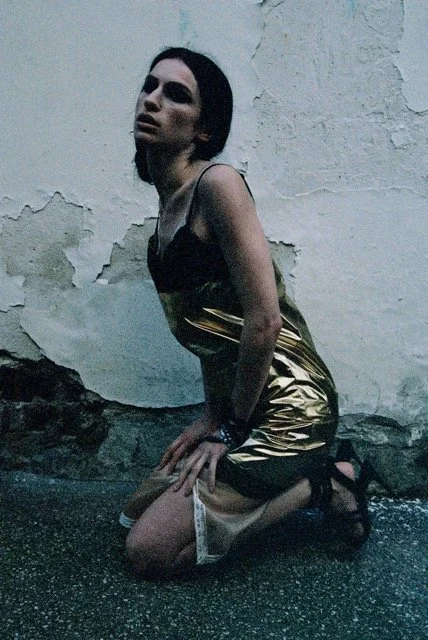
Such Lennox
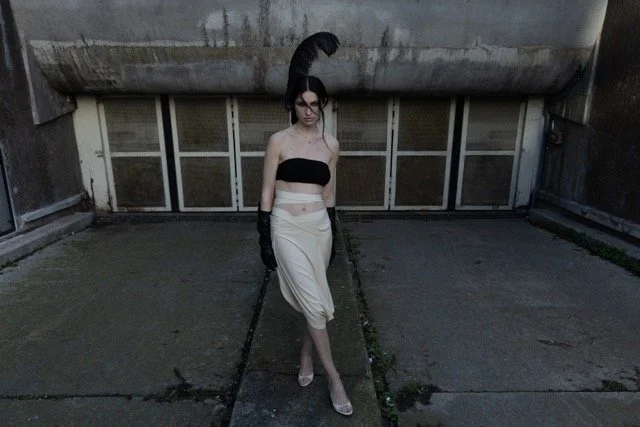
Interview by Germano D’Acquisto
Photography: Jason Renaud
Styling: Sonia Alipio
It is never easy to distinguish between what is inherited and what is earned. In the case of Tali Lennox, the line is thin, almost invisible. Born into an inevitably exposed constellation — the daughter of Annie Lennox and producer Uri Fruchtmann — she chose early on to shift the center of gravity elsewhere: not in the image, but in the gaze. Not in what is shown, but in what remains.
A former model — a passage that, in her case, feels more like a deviation than a destiny — now an artist based in Paris, Lennox has developed a language that resists both the decorative and the self-indulgent. In her work, eros and devotion coexist, the body becomes relic, flesh turns into threshold. There is never neutrality: each canvas emerges from a tension that accumulates until it becomes vision. Her imagery — suspended between romanticism and the gothic, between the sacred and the unsettling — seems to surface from another dimension, where Surrealism is not a reference but an existential stance. Looking at her paintings, one often has the feeling that something is happening just beneath the surface, as if the image were the endpoint of an invisible process rather than its beginning.
At a certain point, something fractures. An abrupt event, which took place years ago on the water, introduced a silent yet definitive rupture that has since run through her entire practice. It is never explicitly displayed, but it is felt: in figures that oscillate between presence and disappearance, in faces that seem to carry elsewhere within them, in the very materiality of the paint, always on the verge of yielding or transforming. From that moment on, painting becomes necessity — a way of staying within what refuses to be named.
Her images — masks, hybrid creatures, apparitions — do not seek consolation; they open spaces. They stage the ongoing conflict between light and darkness that runs through life without ever resolving. In an era obsessed with surface and speed, Lennox works through layering, slowness, friction. Hers is a practice that is both carnal and spiritual, rejecting glamour as a shortcut and reclaiming an untamed, imperfect, even “terrible” beauty — in the deepest sense of the word. Because truth, in her work, is never polished: it is something that resists the gaze. Even when it trembles.
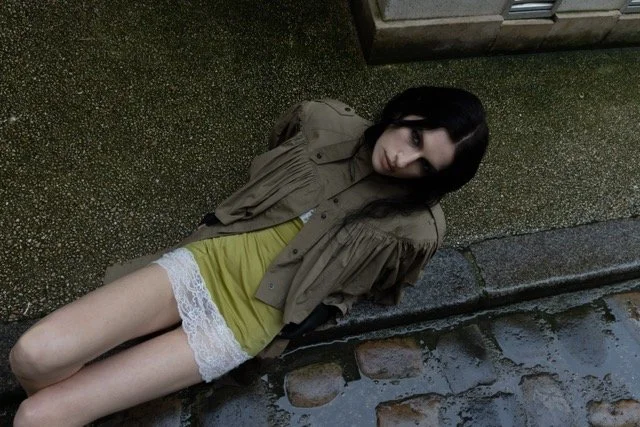
In your paintings, eros and devotion, body and relic coexist: when you begin a work, do you start from a precise image or from a more abstract emotional tension?
I would say my visions often come after a moment of rupture, an opening in which the body merges with the metaphysical. My father says I’m an intensity addict: when I experience a feeling, I like to lean into it fully, which can exhaust me, as if the cup were overflowing. But those moments also connect me to my visual source. Images arrive — I see them with my mind’s eye — they fall into place, and I try not to overanalyze or preconceive them. I’m not interested in neutral or merely “beautiful” spaces; I want to move within a heightened spectrum of existence. I often visit historical relics to tune into the mystery of time, and sometimes I receive messages during prayer or moments in nature or at ancient sites. Other times, more simply, I go through periods of solitude in which the ordinary becomes extraordinary and the surrealism of being feels more vivid.
Your imagery constantly oscillates between attraction and repulsion: how important is it for you to place the viewer in a position of active discomfort?
I’m interested in exploring chambers of secrecy and unease. With painting, you can do anything, so why not venture into lesser-known territories, into hidden depths? I’m the same when I talk to people: I like to ask about their lineage, matters of the heart, their complexities. I’m not very interested in the surface. It’s much more exciting to look for that thin line where friction and intrigue meet. I like to step back from my own paintings and feel excited by them, perhaps thinking, “this is something I’ve sensed but never seen before.” At the same time, in every aspect of my life I value beauty, and I have one rule: I never want my work to feel cruel or isolating. It’s always an invitation.
In your work, beauty never coincides with decorum: what does an untamed beauty look like to you today?I think of the words of André Breton: “Beauty will be convulsive or not at all… Convulsive beauty will be veiled-erotic, fixed-explosive, magic-circumstantial — or not at all.”
You have often described painting as a vital necessity: what happens internally when you go without painting for a while?
Solitude has always been a big part of who I am. I’m very absorbent and sensitive, and I can feel a bit lost when I stray too far from my painting world — as if I were wandering in the woods, taken over by the energies of others. Periods of deep dedication to painting and studio time create an inner cord that gives me a sense of connection I can’t find elsewhere. It’s obsessive, consuming — I compare it to a love affair in which you pour yourself into a single entity and become blind to the outside world. It’s all you think about. And then suddenly it’s over. You leave that spell, that form dissolves. Ready for a new page, a new canvas.
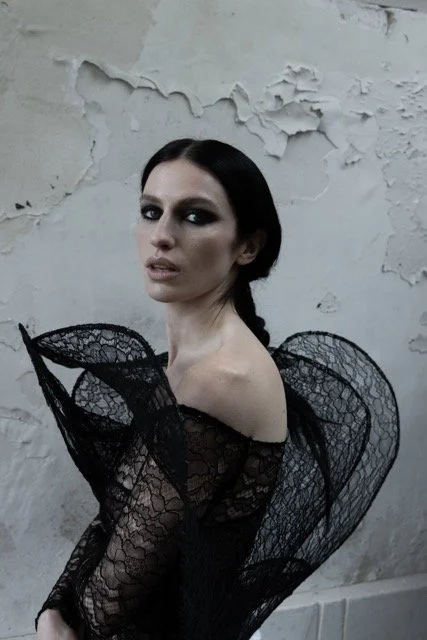
You are self-taught: how has that freedom shaped your relationship with discipline and with error?
I feel that being self-taught has probably given me more discipline. It takes years of perseverance, of making mistakes and bad paintings, to begin to trust your own hand. I’ve been painting in oils for fourteen years, and most of that time has been spent training myself and slowly discovering my territory. You realize there’s no real point of arrival — every painting brings new insights. And that’s humbling.
Is your studio a protected space or a battlefield?
It’s a private space for me. I don’t really like people coming in — I love being alone. The studio can feel like a psychological cave, so having someone else enter feels alien and exposing. I become very shy. However, this relationship might change soon, as I’m moving into a very special atelier I found in Paris — a kind of Belle Époque time warp, where I feel the work will merge more naturally with the space. There, I might invite people more into my realm. After all, the room was originally used for entertainment in the 1800s.
How much does fashion influence your artistic poetics?
A lot. Much of the pleasure in my life comes from transformation and transportation, and the way I dress each day allows me to quietly embody whatever fantasy or historical period I feel drawn to. I go through phases with certain characters — I’m just coming out of a long Elvin phase. These chapters of dressing help me process moments in my life more fully. After my last long relationship ended, I found myself wearing black Victorian clothes for a week straight — I think it helped me release the loss. I love the poetry of layering fragments of history or characters onto my body, just as I weave nostalgic motifs into my work. In my paintings, I often include pieces from my vintage collection: open Victorian jackets, or 1930s silk undergarments.
In an era dominated by fast images and glossy surfaces, what space remains for a slow, carnal, and contradictory painting practice like yours?
I always tell myself: “protect the magic.” I need to keep my own small pocket of truthful wonder alive. Staying in close contact — even just through voice notes — with other artists like my close friend, the choreographer Sharon Eyal, or my mother, who is a musician, helps me feel understood along what is otherwise a solitary path. Lately I’ve been working on projects that honor pioneering Surrealists like Leonora Carrington and Dorothea Tanning, and it feels as if their radical wisdom and courage are quietly guiding me. There’s a brilliant quote by Dorothea that still feels incredibly relevant today: “Keep your eye on your inner world and keep away from ads, idiots and movie stars.”
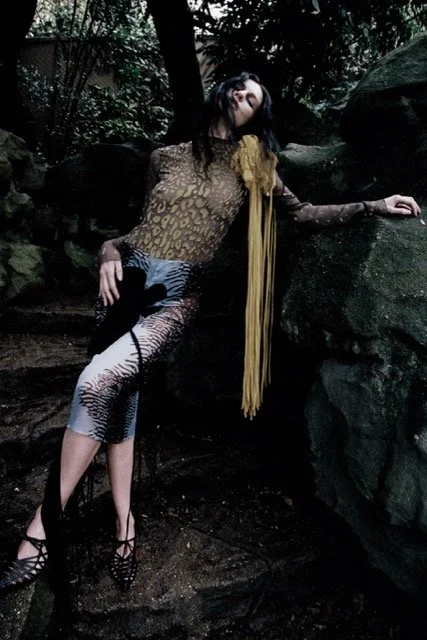
You often speak about authenticity versus artifice: what feels most false today in the way we represent ourselves?
I’m a bit allergic to those who believe that glamour allows for a deadened interior life and a sense of superiority. There is so much injustice in the world — it feels absurd that we still worship false idols not for their minds or their humanitarian contributions, but for the designer bags they wear or the circles of fame they belong to. I find that quite dumb. Glamour is just a lacquered surface; kindness and curiosity remain the most beautiful qualities to me.
Looking ahead, do you feel the desire to push your practice beyond painting — toward installation, writing, or performance — or does the canvas remain your field?
Yes, actually my next two projects are based on documentation and film. Painting is a lifelong relationship for me, but I’m very excited about exploring other ways of sharing messages of wonder. I’ve just republished a book of short stories by Leonora Carrington, The Debutante and Other Stories, with Sendb00ks and Silverpress. We created a new cover and sleeve with my painting and drawing adaptations inspired by her writing. It’s been incredible to tune into the essence of artists like Leonora and Dorothea. I feel them encouraging me to live more confidently within the philosophy of Surrealism — a movement that has never been confined to painting, but has always extended into writing, film, and photography.
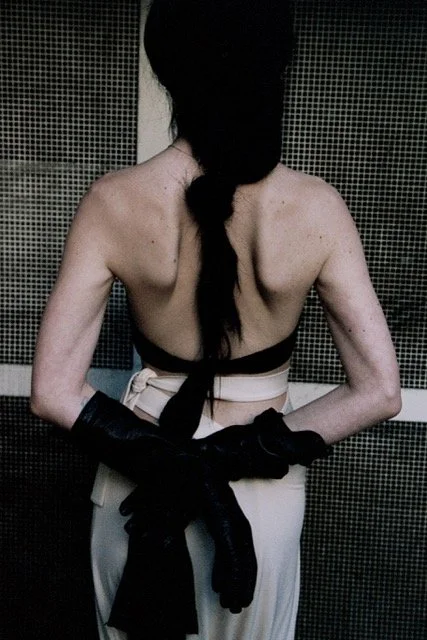
When you think about your work ten years from now, do you imagine greater radicality or a different form of silence?
It depends on how I evolve as a person. I just need to keep living with integrity, with an open soul, and to keep protecting the magic. I have faith that an honest and pure ethos leads to the right path.
What are your plans for the second half of 2026?
I’ve recently begun a relationship with a historic arts institution, and we intend to build a dialogue between Surrealism of the past and neo-surrealism today. In a fragile and chaotic world, the liberated and curious philosophy of Surrealism feels vital to keep alive. I’ll also be filming a project next month with one of my heroes of cinema. This year I feel guided toward paths that allow me to bring my inner worlds outward, into new forms.